Afbeelding
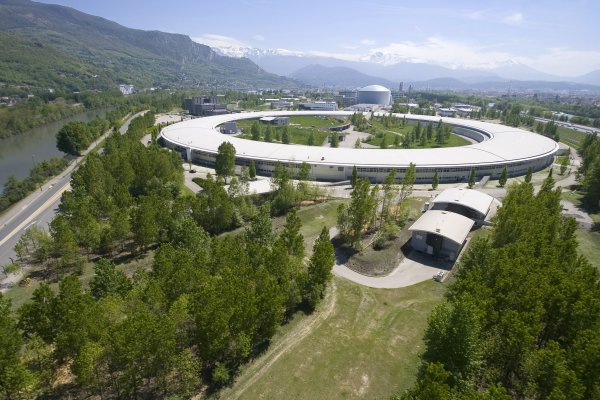
De ESRF in Grenoble
NWO-I
Institutes Organisation of NWO

The European Synchrotron Radiation Facility (ESRF) in Grenoble, France, is home to the world’s first fourth-generation high-energy synchrotron light source. The Extremely Brilliant Source (EBS) delivers intense and stable X-ray beams up to a ten trillion times brighter than medical X-rays. Together with Belgium, the Netherlands is a member of the ESRF Council through NWO-I.
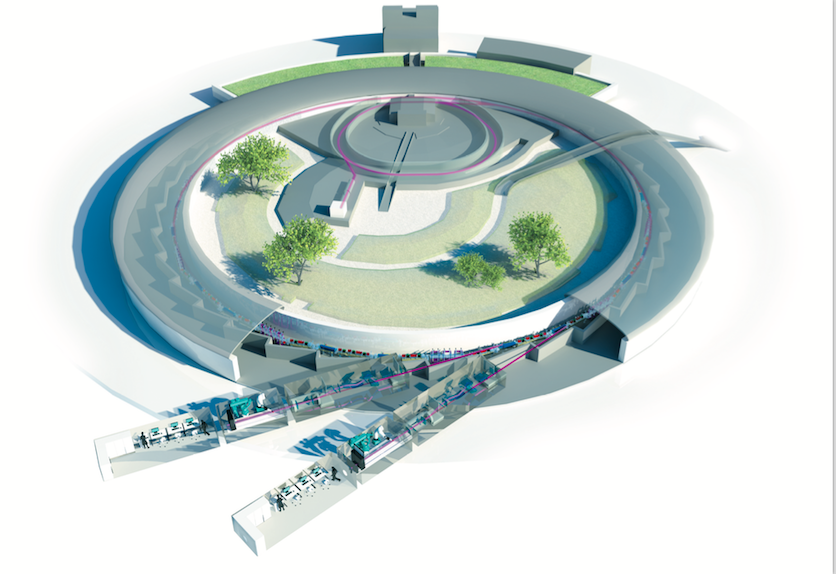
The ESRF-EBS consists of an 844-metre ring-shaped particle accelerator. The accelerator generates more than 40 intense X-ray beams. This radiation is a hundred billion times brighter than hospital equipment. Radiation beams are filtered to a single wavelength and focused into a needle-thin beam only 0.3 millimetres wide. The beams serve as ‘super-microscopes’ that expose the structure of living materials.
The EBS has applications in materials science, chemistry, life sciences, medicine, geology, environment and cultural heritage. The synchrotron light source also has industrial uses, including the pharmaceutical, cosmetic, petrochemical, and microelectronics sectors. Researchers can apply for beamtime on the ESRF website.
The ESRF was established as an intergovernmental organisation in 1988 by eleven European countries, including the Netherlands. The X-ray facility was built in Grenoble and opened in 1994. Today, the ESRF has 19 partner nations, of which 13 are Members and 6 are Scientific Associates.
Overall and day‑to‑day management of the ESRF lies with the Director General and the Council. Together, the Netherlands and Belgium form the Benesync consortium on the Council, each with its own representative but sharing a single vote. The two consortium members are supported by three scientists, one from the Netherlands, one from Flanders and one from Wallonia.
Would you like to find out more about ESRF-EBS, its research and on-site facilities? Then visit the ESRF-EBS-website.