NWO-I

Institutes Organisation of NWO

Research at NWO-I

Our institutes conduct fundamental scientific research and have knowledge and expertise in the natural sciences, engineering sciences and social sciences. Our scientists are driven by curiosity and seek solutions to major societal challenges, such as climate change and the energy transition.

Examples of our research

Mapping the behaviour of solar cell material

AMOLF researchers in the Hybrid Solar Cells group developed a method for studying mobile ions (charged atoms) in perovskite solar cells. 

Afbeelding

Fishing in troubled waters

NSCR is developing a data infrastructure for research into environmental crime, and in particular into illegal fishing in the Netherlands. 

Afbeelding

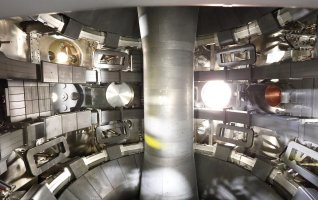
Temperatures in excess of 10,000 degrees Celsius

Researchers from DIFFER and TU/e, together with research teams from the UK’s UKAEA and the European EUROfusion bring nuclear fusion a step closer with a technique that could solve the heat problem.

Afbeelding

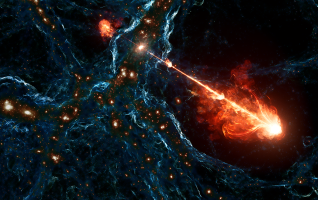
The highest-energy particle ever

The impact of this particle was measured with the KM3NeT neutrino telescope, currently under construction. From the Netherlands, the NWO institute Nikhef, the University of Amsterdam, Leiden University and NIOZ are members of the KM3NeT collaboration. 

Afbeelding

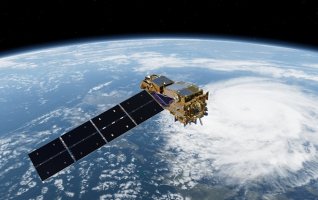
Instrument Sentinel-5 monitors methane

In August 2025, the European Sentinel-5 space instrument was launched as supplement to TROPOMI. SRON supplies the recessed grids for both and developed the software to extract useful data from the observations. 

Afbeelding

E-value makes statistical testing more flexible and robust

The e-value not only makes experiments more flexible, and also allows the level of significance to be adjusted afterwards without compromising reliability.

Afbeelding

LOFAR discovers largest black hole jets ever seen

The LOFAR radio telescope has found the largest pair of eruptions ever observed shooting from a supermassive black hole.

Afbeelding
An illustration of the largest black hole jets ever observed. These eruptions, named Porphyrion after the mythological Greek giant, span roughly 23 million light years. They were observed using the LOFAR radio telescope.